Skin Age Test: What Your "Skin Age" Really Measures
An online or app skin age test estimates how old your skin looks in one photo. Here is what drives the number, what it can't tell you, and how to get a fair result.
6 min read

A skin age test estimates how old your skin looks in one photo. It is not your biological age, and it isn't a health result. The number comes from visible signs such as lines, spots, texture and evenness, so light, expression and the camera can move it. Use it as a rough, personal reference you check under the same conditions, not as a verdict.
What a skin age test actually measures
Most skin age tests, in apps or online, look at a selfie and estimate an age from what they can see: fine lines and wrinkles, uneven tone and dark spots, pores and texture, firmness around the jaw and eyes, and dark circles. The result is an apparent age: the age a model thinks your skin looks.
People do this too. Researchers have studied "perceived age", where human assessors guess someone's age from a photo:
- In a study of 1,826 Danish twins aged 70 and over, perceived age from photos tracked with survival, and it was pushed older by sun exposure, smoking and low body weight (Christensen et al., BMJ, 11 December 2009).
- A study of 102 pairs of female twins found that the look of sun damage was significantly linked to how old women looked for their age, and that a good deal of the variation in perceived age went unexplained (Gunn et al., PLOS ONE, 1 December 2009).
Two things to take from that. Apparent age reflects real habits, especially sun. And even careful human judges, looking at controlled photos, disagree and miss things. An app reading a phone selfie has less to work with, not more.
We couldn't find an independent study of how accurate consumer apps' skin age numbers are. So we won't quote one.
What moves the number
Some things change your skin. Many more change the photo.
| Moves the photo (and the score) | Moves your skin over time |
|---|---|
| Light from above or the side, which deepens lines | Sun exposure without protection |
| Warm or dim light, which shifts colour and adds blur | Smoking |
| Smiling, squinting or frowning | Genes and age itself |
| Camera distance and angle | Dryness and irritation, which make lines look deeper |
| Beauty mode, filters or makeup | How consistently you use sunscreen and your routine |
| A fresh serum or moisturiser adding shine | Sleep, illness or a hard week (short term) |
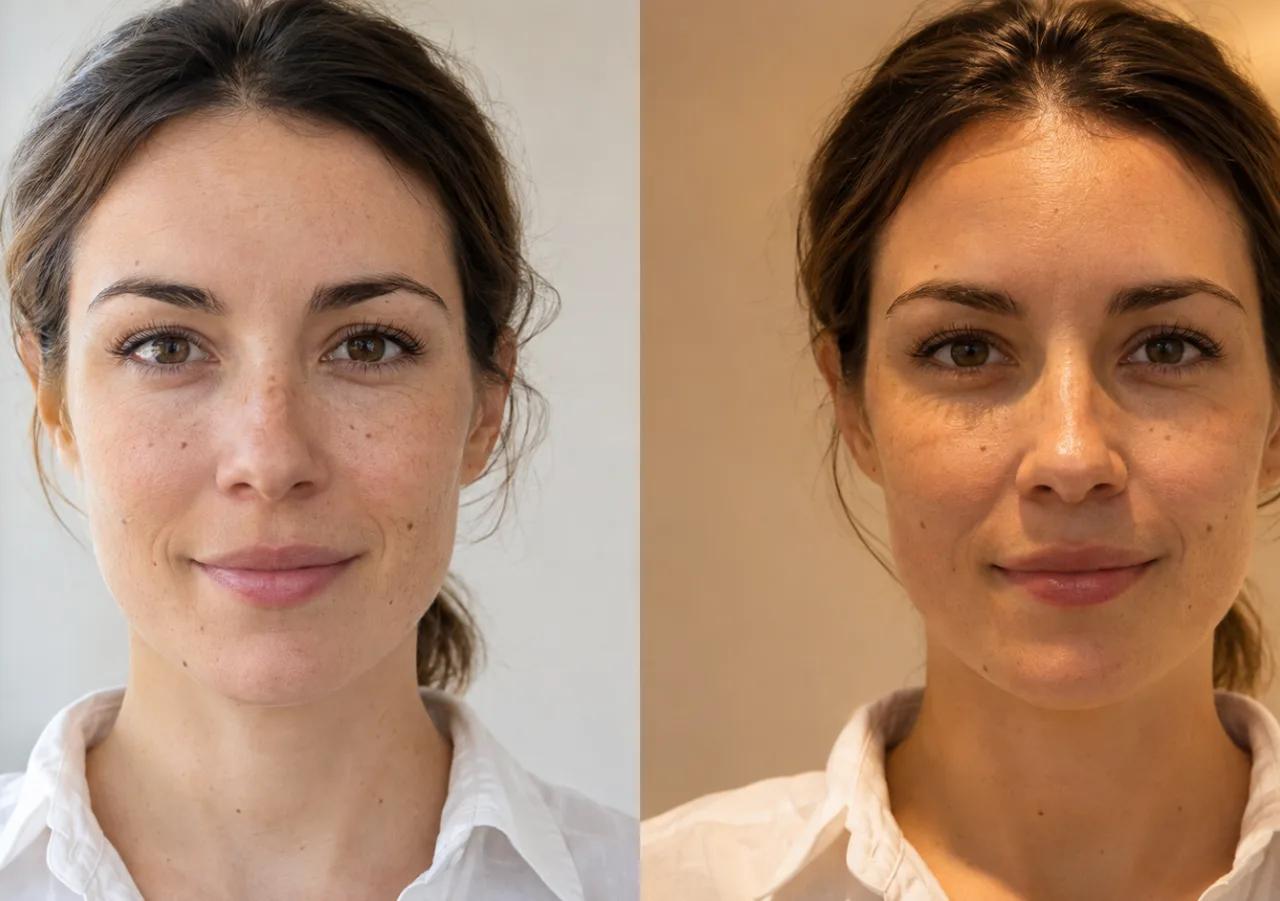
The left column is why the same face can get different ages on the same day. Which?, the UK consumer group, found the light alone could swing a retailer tool's overall skin score by up to 39 points in its October 2026 test (our post on whether AI skin analysis is accurate covers it). That test was of skin scores, not skin age, but a skin age read from the same kind of photo has the same weak point.
What a skin age can't tell you
- How healthy you are. It reads the surface of your face, nothing else.
- How fast you're ageing. One number from one photo isn't a rate.
- Anything medical. It doesn't look for skin conditions, moles or skin cancer. A new or changing spot needs a dermatologist, not an app.
- How you compare with others. Each app uses its own model. A 34 in one app and a 38 in another don't mean anything against each other.
- Your worth, frankly. Skin that looks its age is normal skin.
How to take a fair skin age test
If you want a number you can compare with your next one, keep everything else the same.
- Face a window in daylight, with no lamp behind you.
- Same place and time of day each time.
- No flash, no beauty mode, no filters.
- Clean, bare skin: no makeup, no fresh serum.
- Hair back, glasses off, straight on at arm's length.
- A relaxed, neutral face. Smiling adds lines.
- Take two. If they're far apart, fix the light before you trust either.
Our post on AI skin analysis accuracy has the full checklist and the reasons behind each point.
What actually helps skin look its age, or younger
The research on perceived age points at sun first, and so does the American Academy of Dermatology, which says the sun plays a major role in prematurely ageing skin and lists protecting skin from the sun every day as its first tip (AAD, "11 ways to reduce premature skin aging", last updated 24 February 2021).
- Sunscreen every morning, broad-spectrum, SPF 30 or higher, on all exposed skin, even on cloudy days (AAD, "Sunscreen FAQs", last updated 11 February 2025). See how sunscreen fits with vitamin C and with retinol.
- Don't smoke. The same AAD page says smoking greatly speeds up how quickly skin ages.
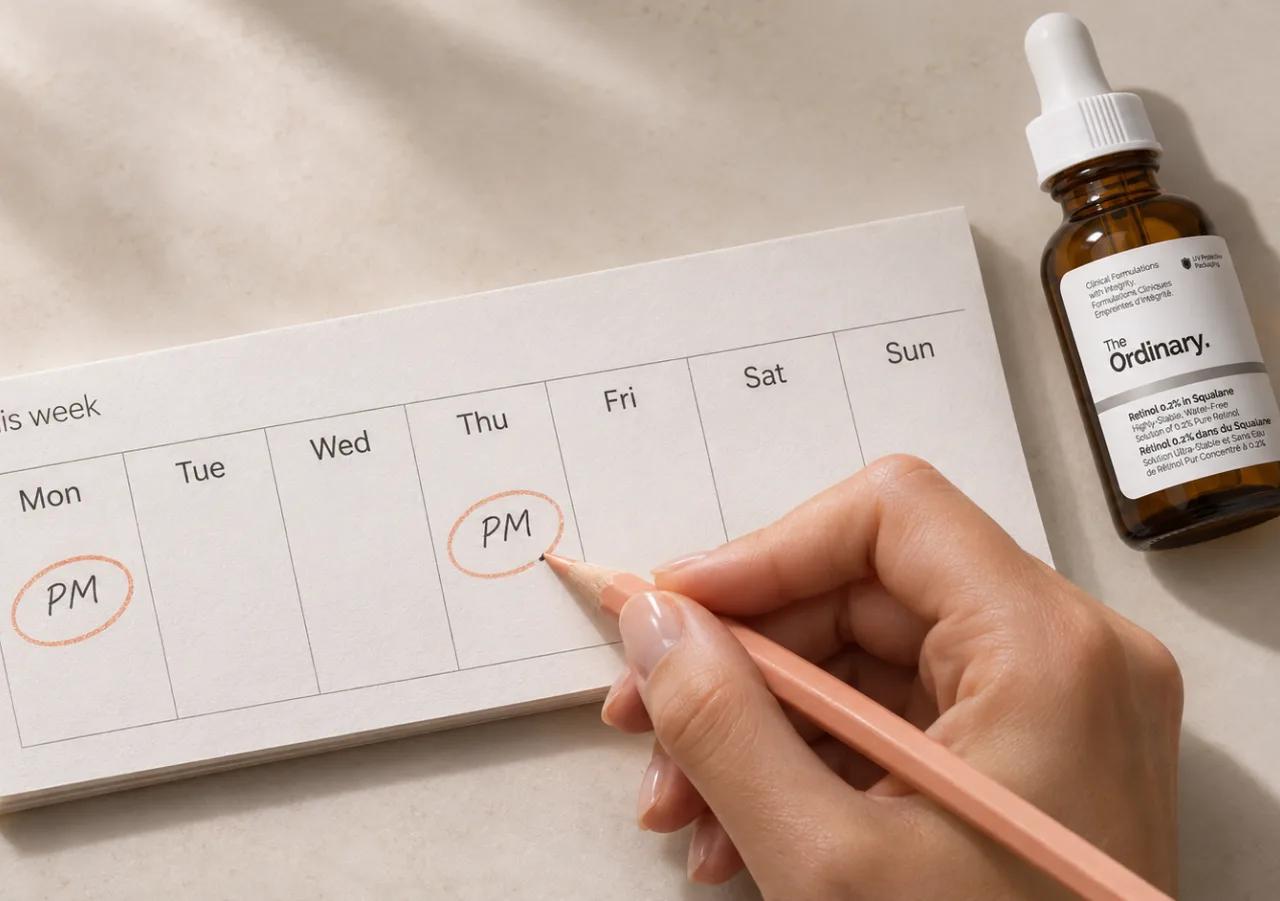
- A retinoid at night, started slowly, if it suits you and you're not pregnant or breastfeeding. Our retinol weekly schedule shows how to start, and the retinol ingredient page explains what it does.
- Moisturiser. It won't change your age, but it softens how dry lines look, often within days.
- Patience. The AAD notes most products take at least six weeks to work, and sometimes up to three months (AAD, "How to maximize results from anti-aging skin care products"). A skin age that drops in a week is more likely a change in the photo.
How Vessa shows skin age
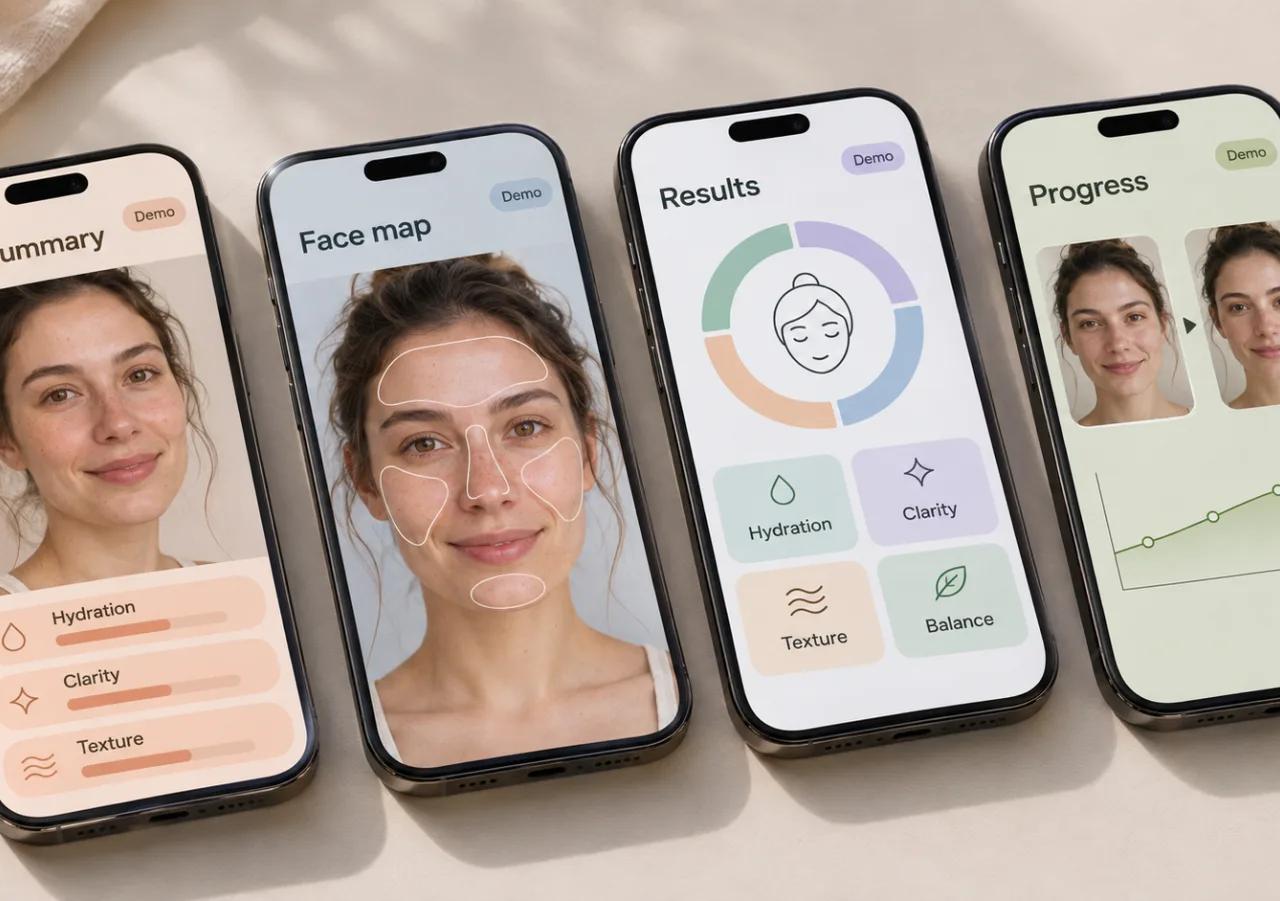
Every Vessa scan estimates an apparent skin age between 15 and 75, alongside eight scores from 0 to 100 (hydration, texture, blemishes, redness, dark circles, firmness, pores and wrinkles), an overall score and your skin type. We describe it the same way this post does: an estimate of how skin looks in a photo, not a medical measure. The camera only takes the picture when it can see your face, with on-screen guidance to face it straight on, in even light, without glasses.
Because skin age moves with the photo, the eight scores are usually more useful: they show which visible sign is driving the number, such as texture or dark circles, and your routine can target that. You can see what's in a Vessa skin report, and the scan and its results are free.
Vessa is a skincare app, not medical advice. A skin age estimate is not a diagnosis; anything new, changing, painful or bleeding on your skin belongs with a dermatologist.
Frequently asked questions
They estimate how old skin looks in one photo, so they're only as steady as the photo. Light, angle, expression and filters can move the number. We found no independent study of how accurate consumer skin age apps are, so treat the result as a rough personal reference.
Usually the photo changed, not your skin. Light from above deepens lines, warm or dim light changes colour, and smiling adds creases. Use the same window light, a neutral face and no filters each time.
No. Skin age is apparent age: how old your face looks. Research on perceived age links it to sun exposure and smoking, but an app's number isn't a measure of your health or how your body is ageing.
You can change what drives it over time. Daily sunscreen and not smoking matter most, a retinoid can help the look of fine lines, and moisturiser softens dry lines. Expect weeks to months, not days.
There isn't a target. A skin age close to your real age is normal. Use the number to compare your own scans under the same conditions, not to compare yourself with anyone else.
Sources
- Christensen K et al., "Perceived age as clinically useful biomarker of ageing: cohort study", BMJ 2009;339:b5262, 11 December 2009. PubMed Central
- Gunn DA et al., "Why Some Women Look Young for Their Age", PLOS ONE 4(12):e8021, 1 December 2009. journals.plos.org
- American Academy of Dermatology, "11 ways to reduce premature skin aging", last updated 24 February 2021. aad.org
- American Academy of Dermatology, "Sunscreen FAQs", last updated 11 February 2025. aad.org
- American Academy of Dermatology, "How to maximize results from anti-aging skin care products", no date shown. aad.org
- Which?, "Can you trust AI skin analysers?", 15 October 2026. which.co.uk