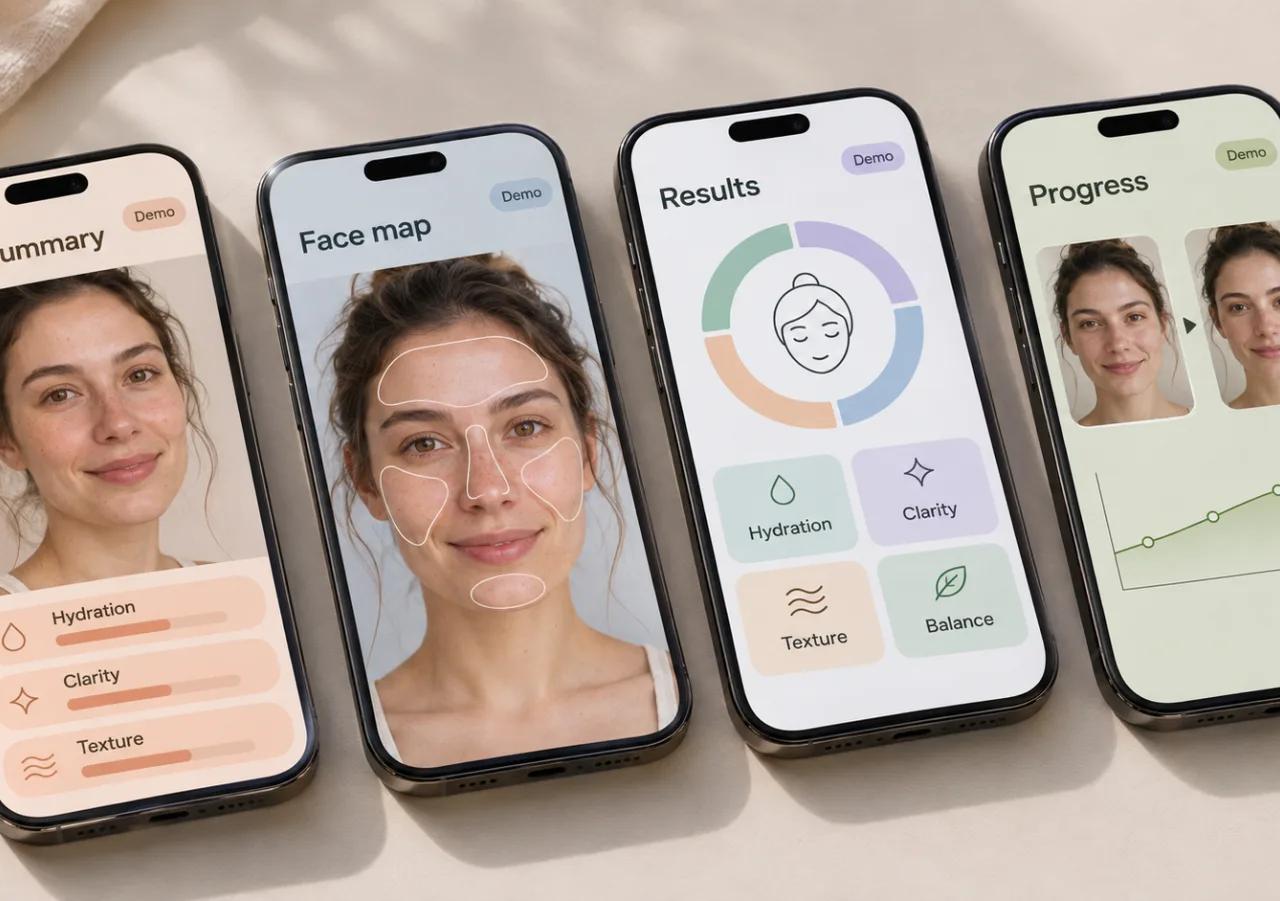
Is AI Skin Analysis Accurate? What Changes Your Score, and What It Can't See
An AI skin score reads one photo, not your skin. Here is what an independent test found, why light moves the number, and how to take a selfie worth scoring.
6 min read
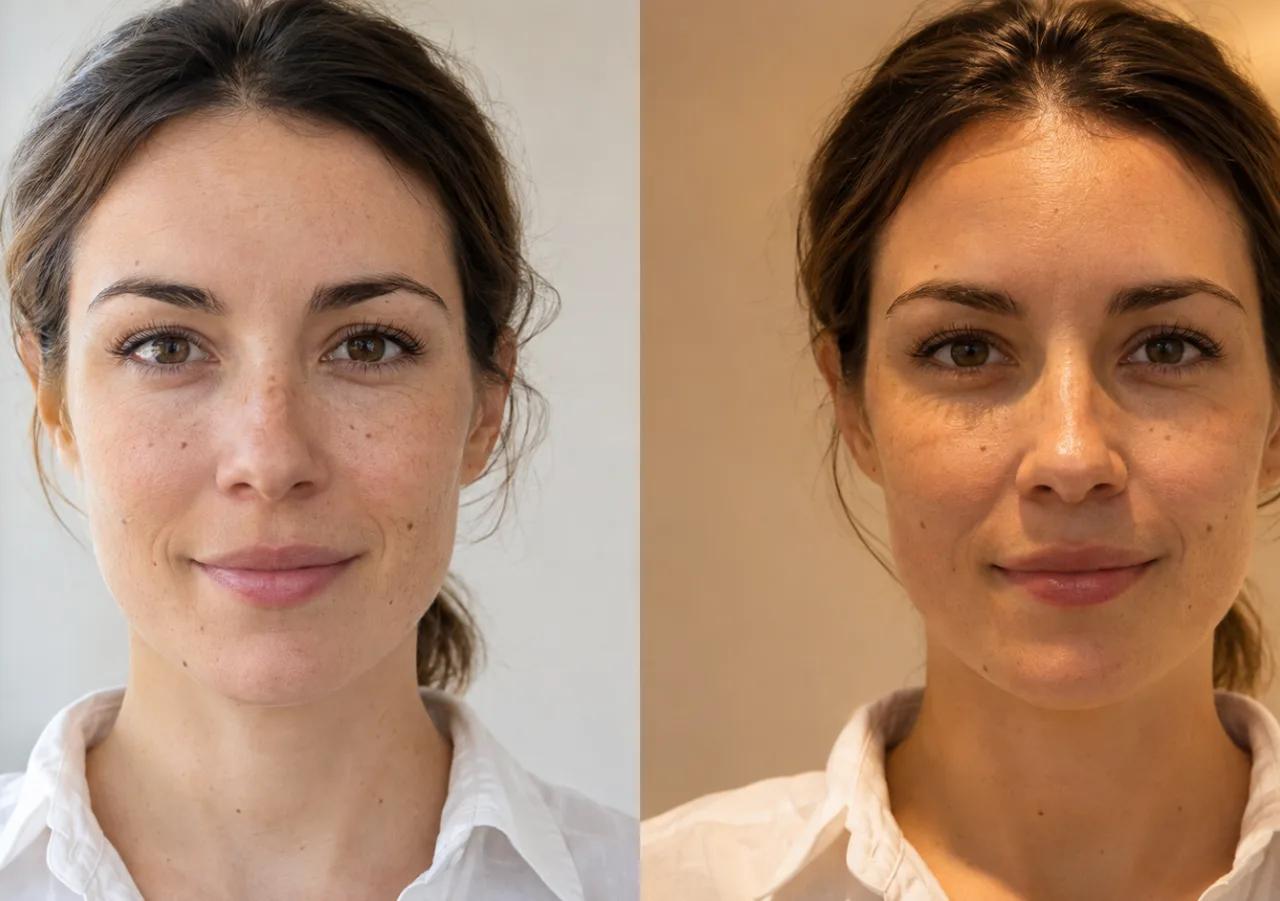
AI skin analysis is a reading of one photo, so it is only as accurate as the photo it gets. Taken twice in the same light, a scan can give nearly the same score. Change the light, the angle or the camera and the score can move a lot: in an independent test published by Which? on 15 October 2026, moving to a different light source swung one tool's overall score by up to 39 points. A skin score is useful for following your own skin under the same conditions. It is not a diagnosis.
What the Which? test found
Which?, the UK consumer organisation, looked at 17 online AI skin scanning tools and found that at least seven ran on the same white-label engine. It then asked 30 people to test one of them, the Boots Skincare Diagnostic Tool, over more than 120 scans (Which?, "Can you trust AI skin analysers?", 15 October 2026).
| What Which? checked | What it found |
|---|---|
| Two scans back to back, good light | The score moved by less than a point on average |
| A scan under a different light | For about half the group, scores swung, from +39 to −25 points |
| Visible acne named as the main concern (14 people) | Missed or contradicted 10 times |
| Dark spots (9 people) | Pigmentation rated as healthy 6 times |
| Redness (7 people) | Not flagged once |
| Did the result match the mirror? | About 63% yes, 37% a complete mismatch |
| Changed questionnaire answers | 25 of 30 got a different morning product list |
Boots told Which? the tool was no longer available online. The test covered one retailer tool, not every skin app, and Which? didn't test Vessa. But the pattern it found is the one to understand: the same face in the same light gives a steady reading, and the light is what breaks it.
Why light changes a skin score
A skin scan doesn't touch your skin. It reads pixels: brightness, colour, edges and shadows. Anything that changes those pixels changes what the model "sees".
- Shadows look like texture. Light from above or the side throws small shadows into pores and fine lines, so they read deeper. Flat, even light makes them read shallower.
- Colour of the light looks like colour of the skin. A warm bulb pushes skin toward red and yellow. That can raise or hide redness and change how dark circles and spots read.
- Glare looks like oil. A bright spot on the forehead or nose can read as shine or as larger pores.
- Low light adds noise. Phones brighten dark photos and smooth the grain, which can blur real texture or add fake texture.
- Phone processing and filters. Some cameras smooth skin on their own. A beauty filter, even a mild one, rewrites exactly what the scan is trying to measure.
- Distance and angle. Too close distorts the face. Tilting your head changes which side catches the light.
- Makeup and fresh products. Foundation hides redness and spots. A fresh serum adds shine.
Dermatologists ask for the same things when they want a useful photo. The American Academy of Dermatology suggests bright, natural light such as a window, no light behind you, no shadows or glare, no makeup on the area, and a sharp, focused picture (AAD, "How to take pictures of your skin for your dermatologist", last updated 20 July 2023). A 2025 best-practice paper for clinicians adds that indirect natural light works best, a flash can cause glare, and moving the camera too close distorts the image (Black et al., Cutis, January 2025).
How to take a skin selfie worth scoring
Use this checklist every time, so your scans compare like with like.
- Face a window in daylight, not direct sun. No lamp behind you.
- Same place, same time of day for every scan.
- Turn off the flash, beauty mode and any filters.
- Bare skin: cleanse, pat dry and wait a few minutes. No makeup, no fresh serum, no sunscreen shine.
- Hair back, glasses off.
- Straight on, at arm's length, chin level, neutral face (no smiling or frowning).
- Check it's sharp before you send it.
- Scan twice. If the two results are far apart, the light is probably the problem, not your skin.
What a skin score can't tell you
- It can't diagnose anything. A score doesn't detect skin conditions, read moles or rashes, or replace a dermatologist. Anything painful, spreading, bleeding or changing quickly needs a doctor.
- It sees the surface on the day. Sleep, a recent workout, a cold room or a long shower all show up.
- Scores from different apps don't compare. Each app has its own scale, its own model and its own idea of what 70 means.
- One scan isn't a trend. Look for a change that holds across several scans in the same conditions.
- Skin age is a look, not a measurement. It estimates how old skin looks in that photo. Our post on what a skin age test really measures goes into why.
Which?'s advice lands in the same place: fill in any questionnaire carefully, take the photo in good light, and don't treat the result as a medical opinion. The dermatologist it spoke to, Dr Emma Wedgeworth, said it's important "not to confuse these sorts of diagnostic tools with medical diagnosis."
How Vessa's scan deals with this
We built Vessa's AI skin analysis with the same limits in mind:
- The camera tracks your face and only takes the picture when it can see your face, with the guidance on screen: straight on, even light, no glasses.
- Each scan gives eight scores from 0 to 100 (hydration, texture, blemishes, redness, dark circles, firmness, pores and wrinkles), an overall score, your skin type and an estimated skin age, each with a short note on what was seen. The skin report explains each one.
- It's built to compare your own scans in similar conditions, and it reminds you to rescan a week after your last one.
- It doesn't diagnose, and its assistant points you to a dermatologist when something needs one.
The scan reads light, so the checklist above applies to Vessa too.
Vessa is a skincare app, not medical advice. It doesn't diagnose skin conditions; anything painful, spreading or changing quickly belongs with a dermatologist.
Frequently asked questions
It can be consistent when the photo conditions stay the same, but it reads a photo, not your skin. In Which?'s October 2026 test of one tool, back-to-back scans in good light moved by less than a point, while a change of light swung scores by up to 39 points.
Usually the light, the angle or the camera changed. Shadows read as texture, warm light reads as redness and glare reads as oil. Scan again in daylight from a window, without makeup or filters, and compare like with like.
A cosmetic skin scan can't. It scores how skin looks, and it doesn't read moles or rashes. If a spot is new, changing, bleeding or painful, see a dermatologist.
Daylight from a window in front of you, not direct sun and not a lamp behind you. Turn off the flash and any beauty filter.
Treat it as a rough estimate of how your skin looks in one photo. It shifts with light and expression, and it says nothing about your health.
Sources
- Which?, "Can you trust AI skin analysers?", 15 October 2026. which.co.uk
- American Academy of Dermatology, "How to take pictures of your skin for your dermatologist", last updated 20 July 2023. aad.org
- Black et al., "Best Practices for Capturing Clinical and Dermoscopic Images With Smartphone Photography", Cutis 115(1), January 2025. Reprint