Is My Skincare Routine Too Much? Signs and How to Cut Back
The signs your skin is getting too much, a checklist to audit your shelf, and how to cut a routine down to the steps that do the work.
6 min read
Your routine is probably too much if products that used to feel fine now sting, your skin stays red or tight, or you're breaking out after adding something new. The usual cause is too many actives at once, or two products doing the same job. Cut back to a cleanser, moisturiser and sunscreen, let your skin settle, then add one active at a time.
Signs your skin is getting too much
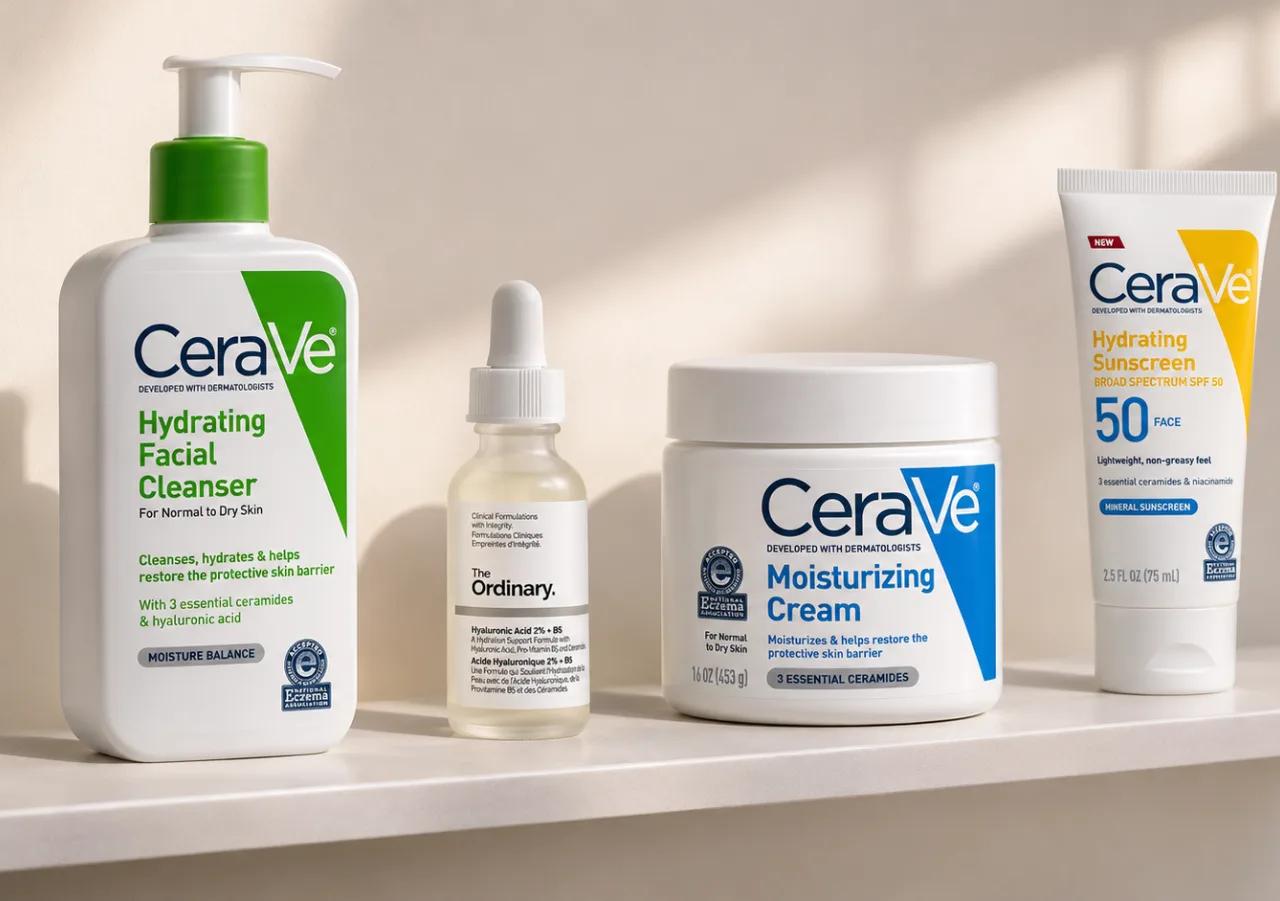
Skin doesn't need many products. The American Academy of Dermatology's page on skin care on a budget (updated 6 November 2026) describes a three-step approach: cleansing, moisturising and protecting. Everything past that is optional, and every extra product is another chance for irritation.
Watch for these:
- Stinging or burning when you apply something that used to be fine. The AAD says that when skin burns or stings, it's irritated.
- Redness that doesn't fade between applications.
- Tightness, flaking or a shiny, stretched look, especially after exfoliating.
- New breakouts soon after adding a product or exfoliating more. The AAD's exfoliation guide (6 February 2026) warns that over-exfoliating can leave skin red and irritated, and that exfoliating alongside some treatments can worsen dryness or even cause breakouts.
- Your moisturiser suddenly stings. That's often a sign the problem is upstream.
Something painful, spreading, blistering or weeping is not a routine problem. See a dermatologist or doctor.
Why it happens
Most "too much" routines aren't long because of cleansers and moisturisers. They're long because of actives: retinoids, exfoliating acids, vitamin C, benzoyl peroxide. The AAD's page on getting results from anti-aging products says it plainly: using several anti-aging products at the same time can irritate your skin, and irritation makes signs of aging more noticeable. Its advice is to start with one product.
Three patterns come up again and again:
- Stacked exfoliation. A glycolic toner, a salicylic serum and a scrub, sometimes all on one night. See exfoliant with exfoliant.
- Retinoid plus acid on the same night. Each is fine. Together they often aren't. See retinol with glycolic acid.
- Duplicates. Two vitamin C serums, three hydrating serums, a toner and an essence that are mostly the same water-and-glycerin base.
A checklist to audit your routine
Lay out everything you use. Then go through this list:
- Does each product have one clear job? Write it down: cleanse, hydrate, treat, moisturise or protect.
- Do two products do the same job? Keep the one you like more. Finish or set aside the other.
- How many actives are in use? Count retinoids, exfoliating acids, vitamin C, benzoyl peroxide and azelaic acid. The more you start at once, the more likely irritation is, and the harder it is to tell which one caused it.
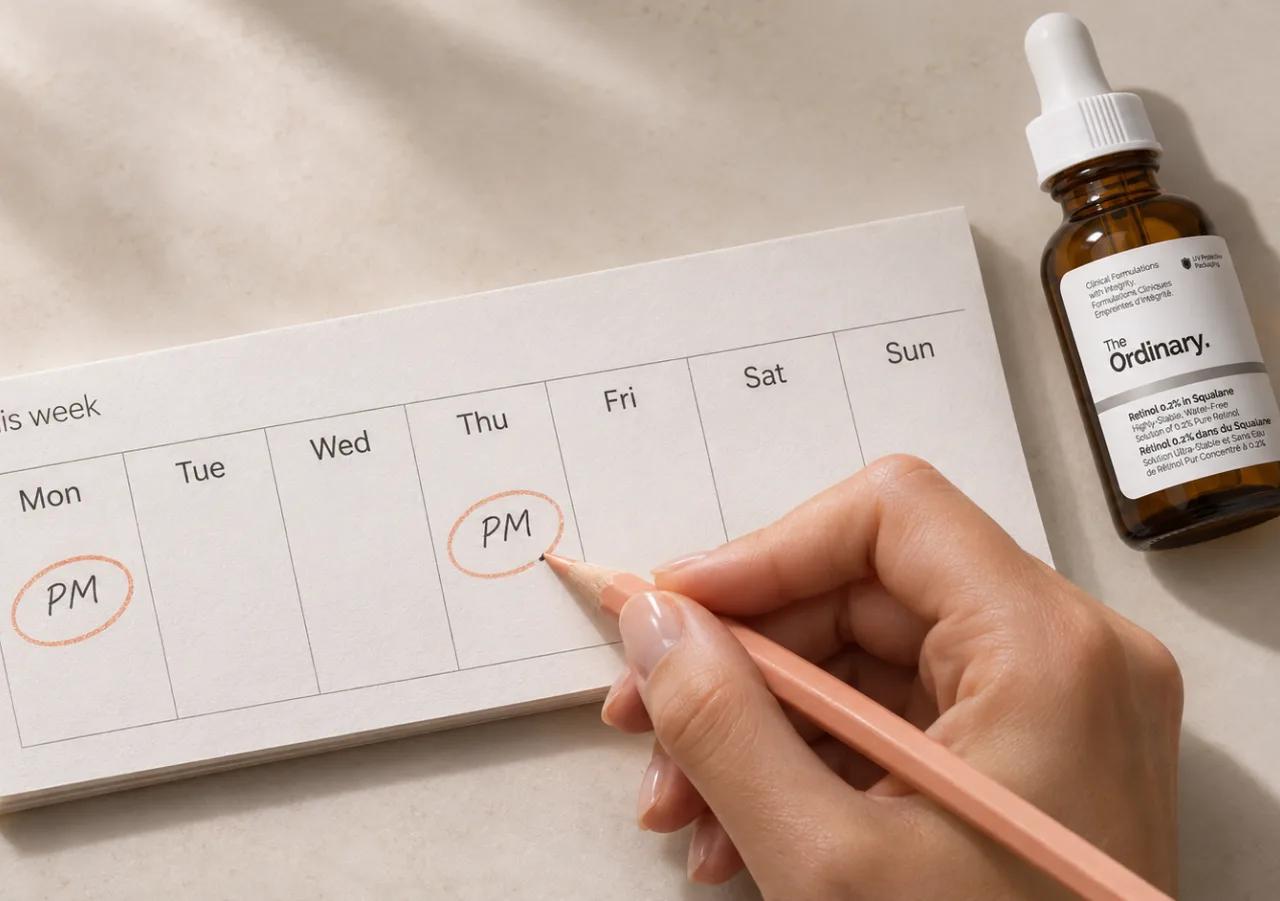
- Do a retinoid and an acid share a night? Split them onto different nights.
- How many nights a week do you exfoliate? Vessa's routines use two at most, on nights without a retinoid.
- Is there sunscreen every morning? If anything here is non-negotiable, it's this.
- Did you add more than one new product in the last month? If so, you can't tell which one is the problem.
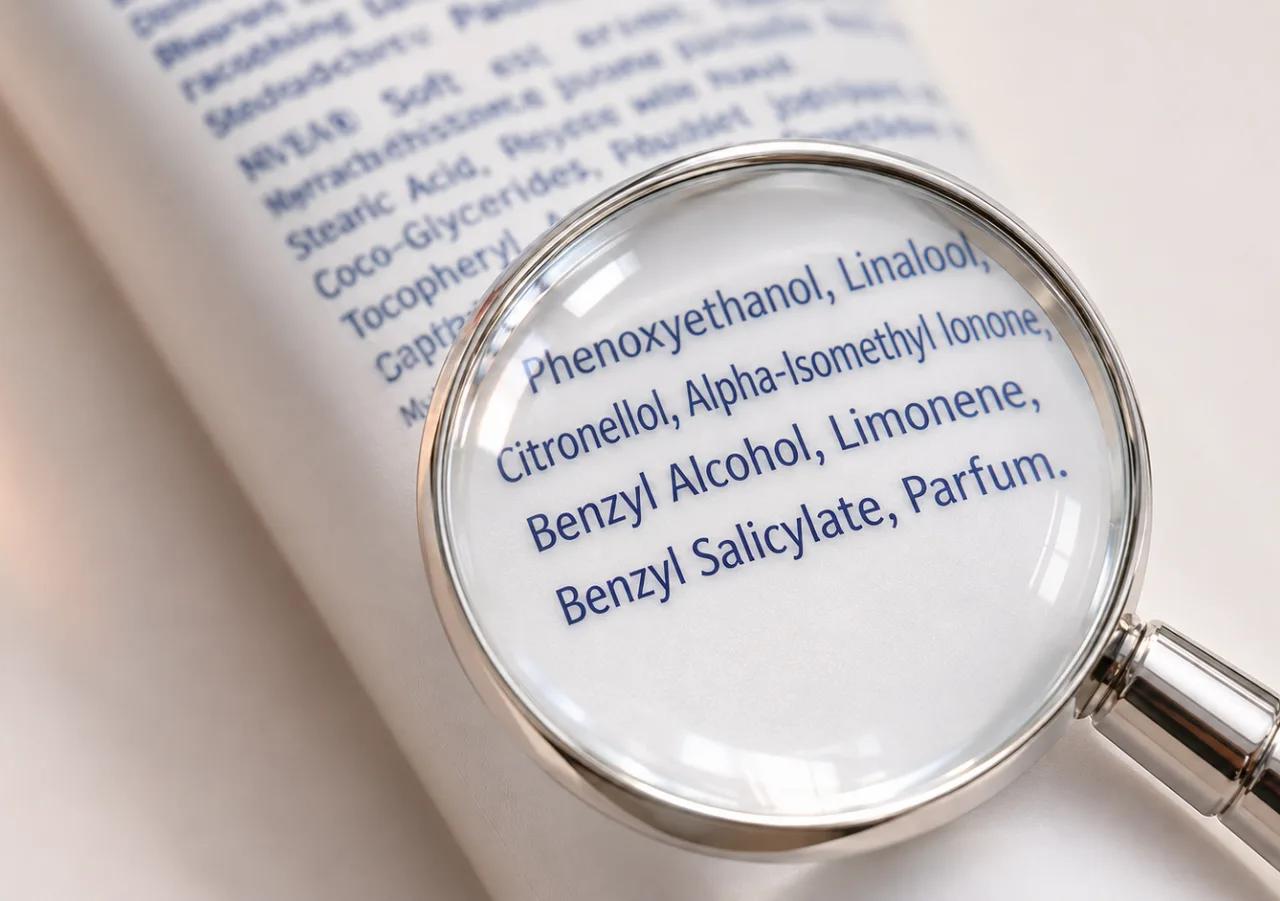
- Are any products fragranced? Fragrance is a common cause of skin reactions. Paste a list into the ingredient checker to see.
What to cut first
| If you use... | Keep | Cut or space out |
|---|---|---|
| Two or more exfoliating acids | One, on 2 nights a week | The others |
| A retinoid and an acid on the same night | Both, on different nights | The shared night |
| Two vitamin C serums | One, in the morning | The second |
| A toner, an essence and two hydrating serums | One hydrating step | The rest |
| Benzoyl peroxide and a retinoid at night | Benzoyl peroxide in the morning | The evening overlap |
| A scrub plus a chemical exfoliant | The one your skin tolerates | The scrub |
The routine order tool shows where each step goes and which nights the strong ones belong on.
How to reset, step by step
- Two weeks of basics. A gentle cleanser, a plain moisturiser and sunscreen in the morning. Nothing else. The AAD's face washing guide suggests lukewarm water, fingertips, no scrubbing and patting dry.
- Add one active back. The one that matters most for your goal. Start it on 2 nights a week if it's a retinoid or an acid.
- Wait before adding another. The AAD says most products take at least six weeks to work, and sometimes up to three months. Adding something new every week makes it impossible to tell what's helping.
- Patch test anything new. The AAD's guide to testing skin care products suggests applying it to a quarter-sized spot twice a day for seven to ten days.
If you have rosacea, eczema or psoriasis, talk to a dermatologist before adding exfoliating acids back. Vessa leaves them out entirely for those conditions.
How many steps is the right number?
There's no right number. A good routine is one you'll actually do. Vessa lets you choose the size up front: Simple (3 to 5 essential steps), Balanced (the full basics, morning and night) or Advanced (more steps only when they're genuinely useful). For reactive skin, it brings in fewer new actives at once and picks fragrance-free products.
Let something else count the overlap
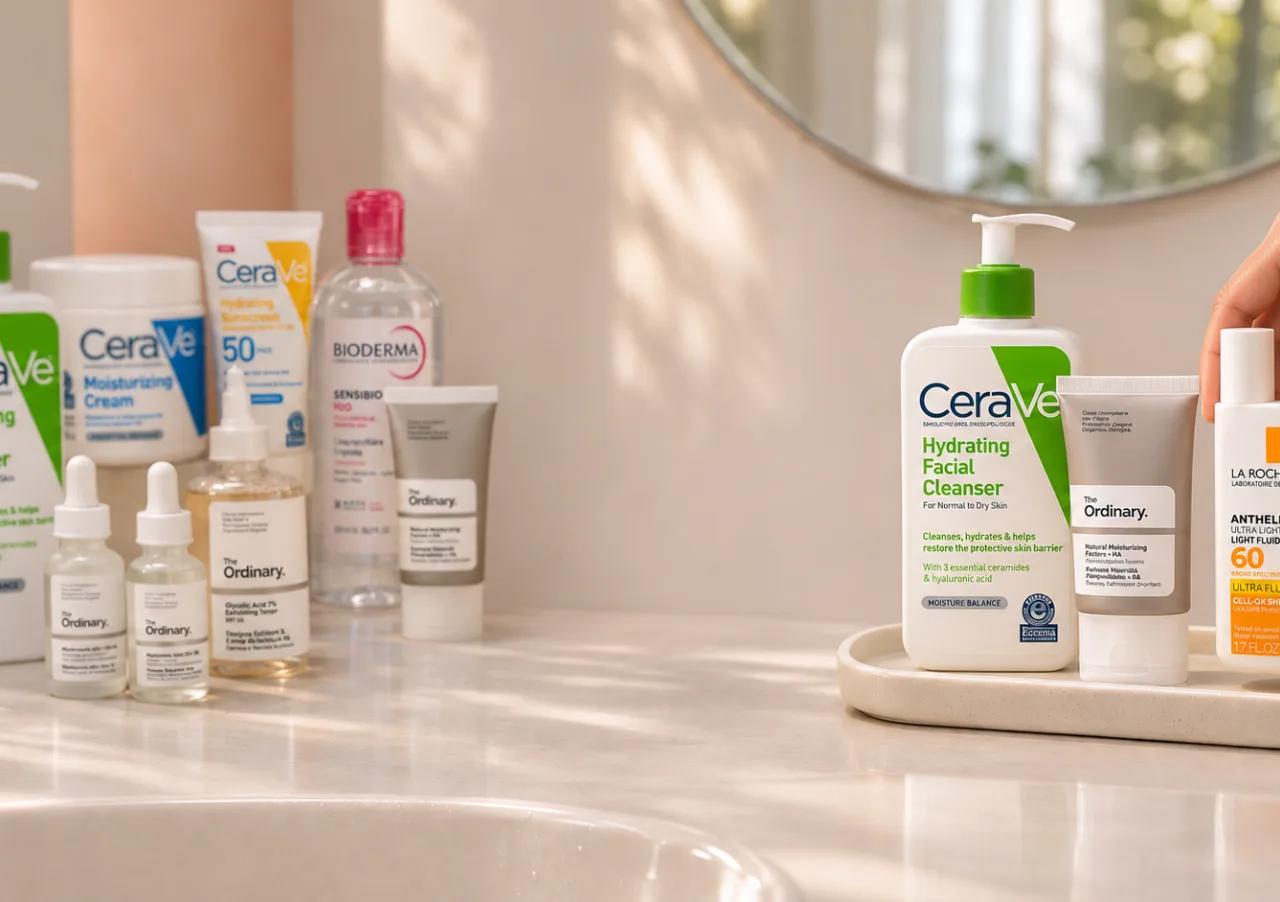
If you have a full shelf and don't know where to start, the Vessa shelf tracker gives every product you own a verdict: Keep, Finish First, Duplicate, Do Not Repurchase, Not Recommended, Optional or Needs Review, with a short reason. It warns you when two products do the same job, and you can ask Vessa AI "Can I simplify it?" to get changes as cards you approve.
Vessa is a skincare app, not medical advice. If your skin is painful, blistering or getting worse after you cut back, see a dermatologist.
Frequently asked questions
There's no set number. The AAD describes a basic routine as three steps: cleanse, moisturise, protect. Problems usually come from stacking actives, not from the number of bottles. If your skin stings or stays red, cut back.
Redness, stinging, tightness, flaking or new breakouts after exfoliating are common signs. The AAD warns that over-exfoliating can leave skin red and irritated. Stop exfoliating until your skin settles, then go back to no more than a couple of nights a week.
It can. The AAD notes that exfoliating while using certain treatments may worsen dryness or even cause breakouts. New products are also a common trigger, which is why adding one at a time helps.
It varies. Give it a couple of weeks of a basic routine before adding anything back, and see a dermatologist if it isn't improving.
Don't change a prescribed treatment on your own. Ask the dermatologist or doctor who prescribed it.
Sources
- American Academy of Dermatology, "Skin care on a budget", last updated 6 November 2026: aad.org
- American Academy of Dermatology, "How to safely exfoliate at home", 6 February 2026: aad.org
- American Academy of Dermatology, "How to maximize results from anti-aging skin care products": aad.org
- American Academy of Dermatology, "How to test skin care products", last updated 10 August 2021: aad.org
- American Academy of Dermatology, "Face washing 101": aad.org
- American Academy of Dermatology, "11 ways to reduce premature skin aging", last updated 24 February 2021: aad.org