How to Find Skincare Dupes by Ingredients (and When a Dupe Isn't One)
A real skincare dupe shares the same type, the same key actives and a similar top of the ingredient list. Here is how to compare two labels, and what a label can't tell you.
6 min read
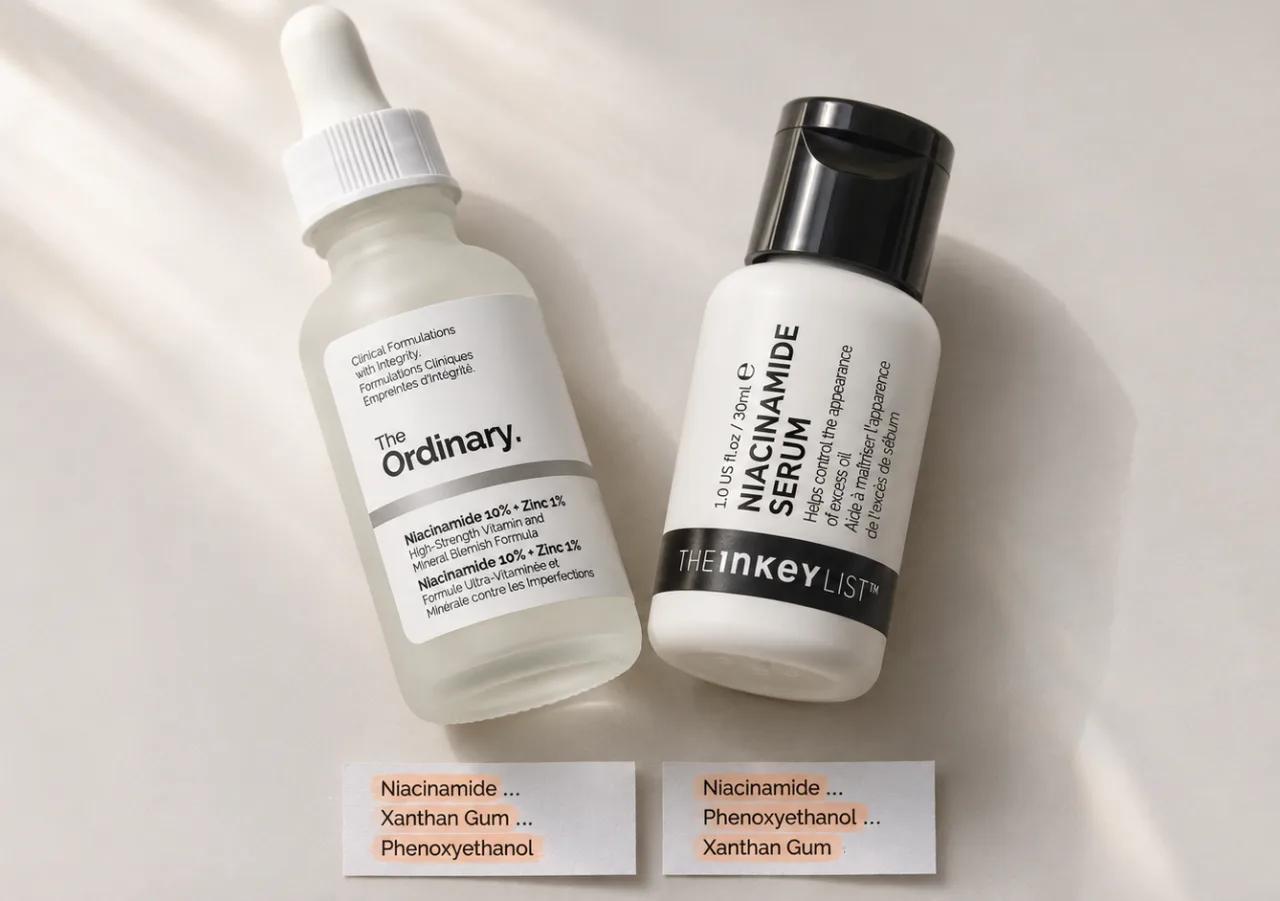
A skincare dupe is only a dupe if it does the same job: the same type of product, the same key actives, and a similar top of the ingredient list. You can check most of that from the labels in a few minutes. What a label can't show you is how much of each ingredient there is or how the formula feels, so two close lists can still behave differently on your skin.
What "dupe" should mean
"Dupe" is a marketing word, and it gets used loosely. A cheaper product with the same hero ingredient in the name isn't automatically a dupe. A fair test has three parts:
- Same product type. A retinol serum compared with a retinol serum, not with a retinol eye cream or night cream.
- The same defining actives. If one has retinol and the other doesn't, they aren't the same product, however similar the rest is.
- A similar top of the list. The first ingredients make up most of the formula, so that is where two products should look alike.
Why the top of the list matters most
Ingredient lists follow rules. In the US, ingredients are declared "in descending order of predominance", and those at 1% or less can be listed in any order after the rest (21 CFR 701.3). The EU rule is the same idea: descending order of weight, with anything under 1% in any order after the rest (Regulation (EC) No 1223/2009, Article 19).
That gives you three practical rules:
- The first five to ten ingredients are most of the product. Water, glycerin, oils, silicones and thickeners usually live here. They decide texture and feel.
- Past a certain point, order means little. Below 1%, a brand can list ingredients in any order, so you can't tell which of two minor ingredients there is more of.
- Many actives work at low levels. Retinol, for example, is usually far down the list. Its position alone doesn't tell you strength.
A side-by-side checklist
Use this when you compare a product you like with a possible dupe.
| Check | Where to look | What a match looks like |
|---|---|---|
| Product type | Name, category, how it's used | Both are serums, both are sunscreens, and so on |
| Defining actives | Whole list | Same retinoid, acid, vitamin C, azelaic acid, benzoyl peroxide or sunscreen filters |
| Declared strength | Front of pack, if stated | Same or close (for example 10% vs 10%) |
| First ten ingredients | Top of the list | Mostly the same, in a similar order |
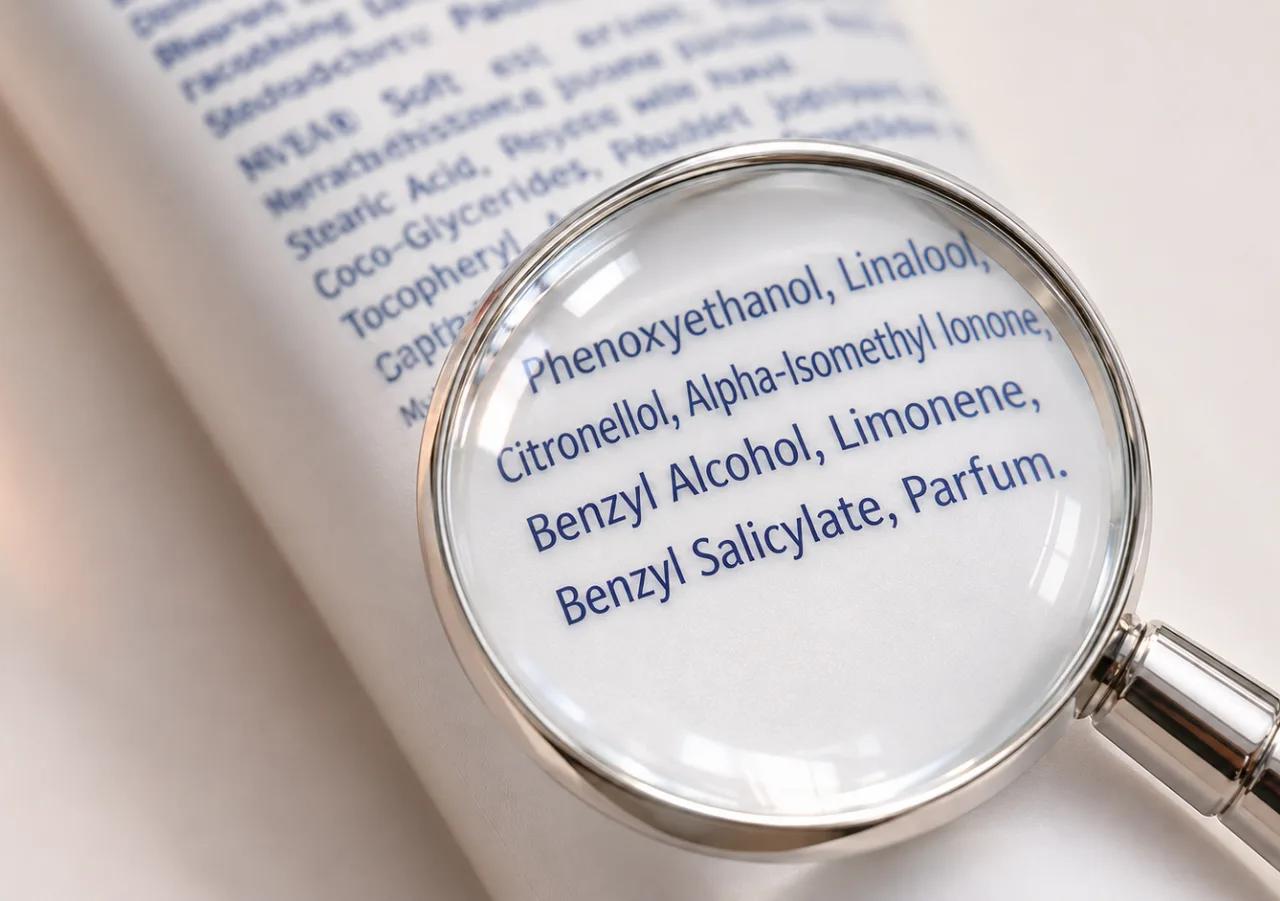
| Fragrance and essential oils | Whole list | Both free of them, if that matters to you |
| Drying alcohol | Top third of the list | Present in both or neither |
| Use | Leave-on or rinse-off | The same |
If the defining actives don't match, stop there. Everything else is detail.
What a matching label still can't tell you
- Exact amounts. Most lists give no percentages. Two products can share retinol in the same position and contain quite different strengths.
- pH. It isn't on the label, and it matters for acids and some forms of vitamin C.
- Grade and form. The same INCI name can cover different raw materials and particle sizes, which is especially true for sunscreen filters.
- Texture and how it wears. Feel, finish, white cast and pilling come from the whole formula and the way it's made.
- Stability and packaging. How a formula is protected from light and air isn't on the list.
So treat a close match as "worth trying", not "identical". And patch-test the new one first: the American Academy of Dermatology suggests a quarter-sized spot, twice a day for seven to ten days (AAD, "How to test skin care products", last updated 10 August 2021).
Check two labels with Vessa
Paste each ingredient list into the ingredient checker. It shows the key actives and flags such as fragrance and drying alcohol, so you can run the checklist above on both products.
Good reasons to look for a dupe
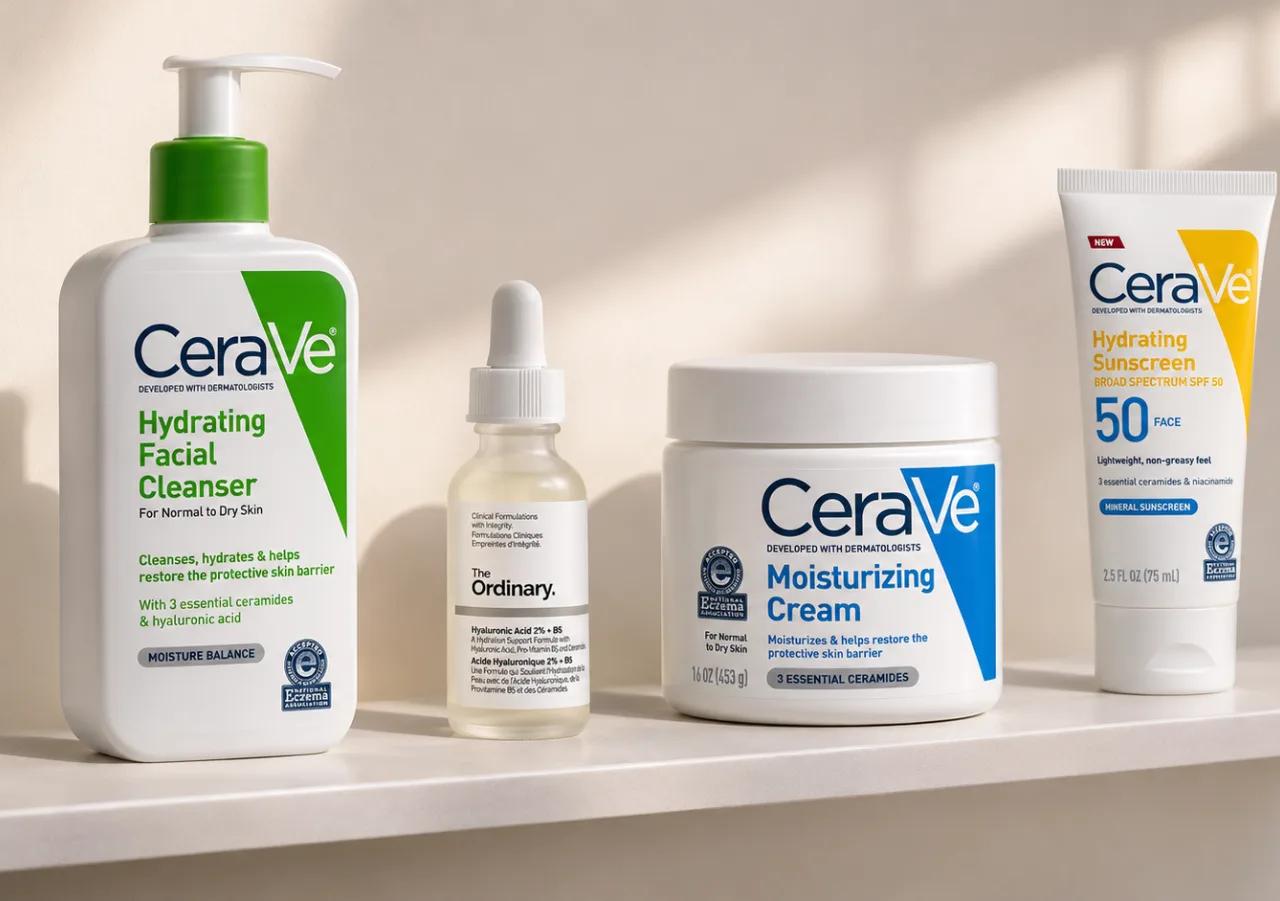
- Price. The most common reason, and a fair one. The American Academy of Dermatology notes that effective anti-aging products come in all price ranges (AAD, "How to select anti-aging skin care products").
- Fragrance. Finding the same actives without fragrance or essential oils, if your skin reacts to them. Our fragrance data post shows how common they are by product type.
- Availability. A product was discontinued or isn't sold where you live.
- Pregnancy. Not a dupe search at all. If you need to drop a retinoid, the answer is a different active, not a cheaper retinoid. See pregnancy-safe skincare.
When a dupe isn't worth it
- The defining active differs. Bakuchiol isn't a retinoid. Niacinamide isn't vitamin C. They may be good products, but they're different products.
- The vehicle differs. A gel and a rich cream with the same active will feel and work differently.
- It's a sunscreen. Match on the stated SPF and broad-spectrum claim on the pack, and on how much you'll actually apply. A sunscreen you like wearing beats a cheaper one you skip.
- It's a prescription. Prescription products aren't dupe territory. Ask your prescriber or pharmacist.
Swapping a product inside a routine
If you're replacing one step of a routine, keep the rest the same for a few weeks so you can tell what the new product is doing. The AAD notes most products take at least six weeks to show results, and some up to three months (AAD, "How to maximize results from anti-aging skin care products").
In the Vessa app, any step in your routine can be swapped for two or three alternatives for the same slot, each tagged by budget tier with the price difference and how well it fits your skin, and the replaced product stays one tap away. See how the routine builder handles swaps.
Vessa is a skincare app, not medical advice. If a product irritates your skin, stop using it; if it keeps happening, see a dermatologist.
Frequently asked questions
Check that it's the same type of product, that it has the same defining actives, and that the first five to ten ingredients are mostly the same in a similar order. Even then, strength, pH and texture can differ, so treat it as similar, not identical.
Only roughly. Ingredients are listed from most to least, but those at 1% or less can be listed in any order. Many actives work at low levels, so their position doesn't tell you strength.
Sometimes. Price doesn't decide whether an active works, and effective products come in all price ranges. A cheaper product with the same actives and a similar base is often a fair swap; one that only shares a name ingredient isn't.
Often, yes. Compare the actives and the top of the list, then check the whole list for parfum, fragrance and essential oils. The ingredient checker flags fragrance in either list.
Sources
- 21 CFR 701.3, "Designation of ingredients" (Legal Information Institute copy). law.cornell.edu
- Regulation (EC) No 1223/2009 on cosmetic products, Article 19, 30 November 2009. eur-lex.europa.eu
- American Academy of Dermatology, "How to test skin care products", last updated 10 August 2021. aad.org
- American Academy of Dermatology, "How to select anti-aging skin care products", no date shown. aad.org
- American Academy of Dermatology, "How to maximize results from anti-aging skin care products", no date shown. aad.org